

Clinically Reviewed By
Dr. James H. Singletary, OD, FIAOMC
Co-Founder · Myopia Control Specialist · Eye Medics Optometry
Last reviewed: March 2026 · View full bio →
What is myopia control and is it available in North Carolina?
What Is Myopia — and Why Is It a Crisis in NC?
Myopia (nearsightedness) occurs when the eyeball grows too long, causing distant objects to appear blurry. In North Carolina, rates have climbed sharply over the past two decades — driven by increased screen time, reduced outdoor activity, and genetic factors common in military and diverse communities.
The critical window is ages 6–14. During these years, the eye is still growing. Without intervention, myopia can progress to high myopia (−6.00 D or worse), which dramatically increases the lifetime risk of retinal detachment, glaucoma, and macular degeneration — conditions that can cause permanent vision loss.
At Eye Medics Optometry, I have treated hundreds of myopic children across Cumberland, Hoke, and Robeson counties. Our approach is evidence-based, FDA-cleared where applicable, and tailored to each child's lifestyle and prescription trajectory.
Medical Disclaimer
This page is for informational purposes only and does not constitute medical advice, diagnosis, or treatment. The information provided here should not be used as a substitute for professional medical advice from a qualified eye care provider. Always consult with a licensed optometrist or ophthalmologist regarding any eye health concerns, symptoms, or treatment decisions.
The Myopia Epidemic in North Carolina
North Carolina's public school vision screenings test for visual acuity at a single distance — they do not measure axial length, which is the key indicator of myopia progression risk. A child can pass a school screening and still be progressing rapidly. A comprehensive eye exam with axial length measurement is the only way to know.
School Screenings Miss Progression
NC public school screenings only check if a child can see the board. They do not track axial length — the true measure of myopia progression.
Screen Time Is Accelerating Onset
Children spending 6+ hours per day on screens are 3× more likely to develop myopia before age 10 compared to children who spend 2 hours outdoors daily.
Genetics Compound the Risk
A child with one myopic parent has a 3× higher risk. With two myopic parents, the risk is 6×. Early screening and intervention are essential for these families.
Myopia Control Treatments We Offer in NC
Every child's myopia progresses differently. We match the treatment to the prescription, lifestyle, and family goals — not the other way around.
Orthokeratology (Ortho-K / sleepSEE®)
Custom overnight contact lenses that gently reshape the cornea while your child sleeps — providing clear daytime vision without glasses or contacts, and slowing axial eye growth by up to 78%. This is our most popular and most effective myopia control treatment.
Most EffectiveLow-Dose Atropine Eye Drops
Low-dose atropine (0.01%–0.05%) applied nightly has been shown in multiple clinical trials to reduce myopia progression by 50–77% with minimal side effects. Often used in combination with Ortho-K for maximum effect.
Clinical EvidenceMyopia Control Spectacle Lenses
Specialized spectacle lenses (Stellest®, DIMS technology) designed to reduce peripheral defocus — the signal that drives axial eye elongation. Ideal for younger children not yet ready for contact lenses.
New Technology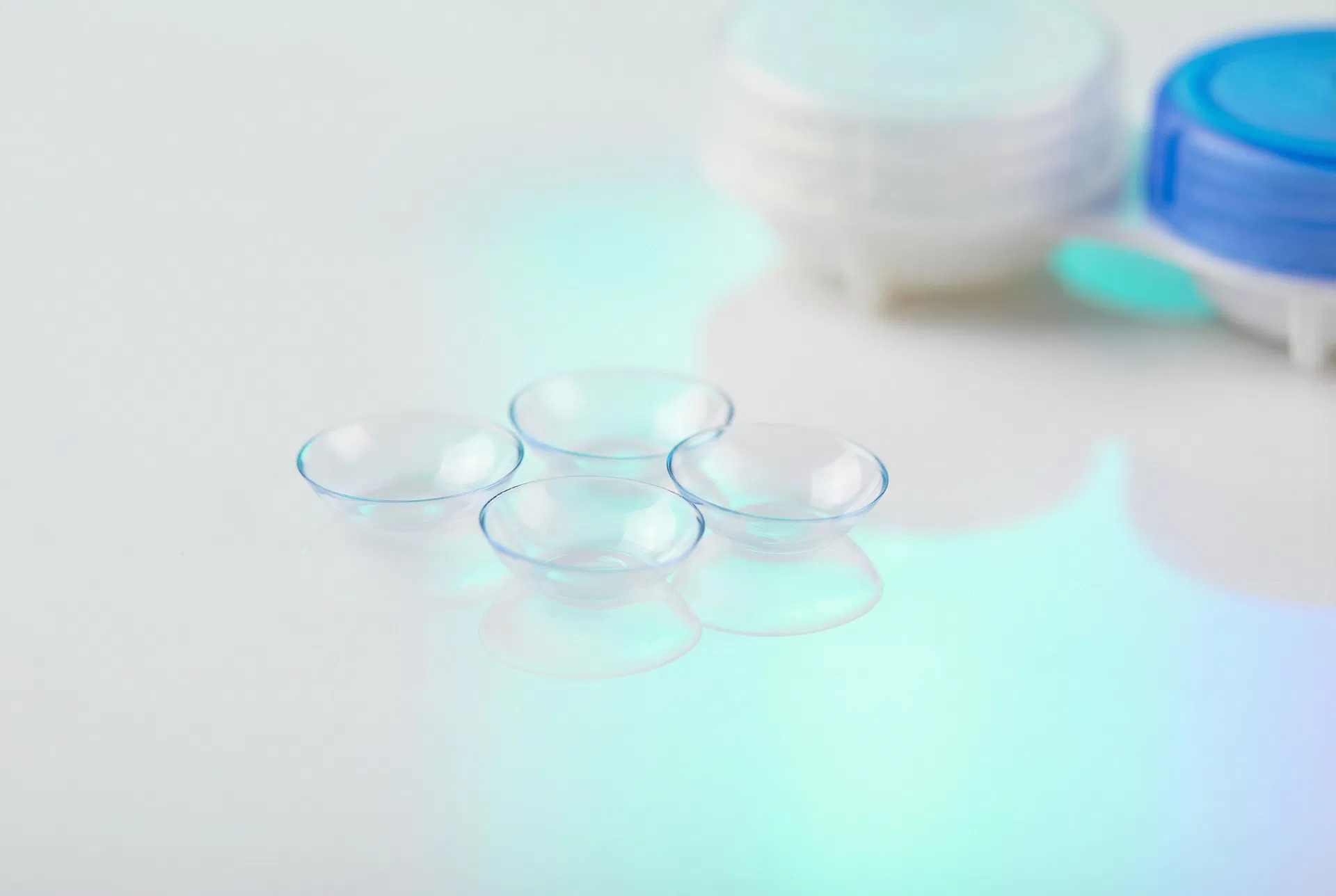
Which Myopia Control Treatment Is Right for Your Child?
Use this table as a starting point — Dr. Singletary will recommend the best option after a comprehensive exam.
| Treatment | Age | Daytime Freedom | Slows Progression | FDA Cleared | Best For |
|---|---|---|---|---|---|
| Ortho-K (sleepSEE®) | 7+ | ✓ Yes | Up to 78% | ✓ | Active kids, athletes, swimmers |
| Atropine Drops | 5+ | ✓ Yes | 50–77% | Off-label | Young children, combo therapy |
| Myopia Control Glasses | 6+ | Worn during day | 30–60% | Off-label | Not ready for contacts |
| Standard Glasses | Any | Worn during day | None | ✓ | Correction only — no control |
Why NC Families Choose Eye Medics for Myopia Control
FIAOMC Designation — Rare in NC
I hold the FIAOMC designation — Fellow of the International Academy of Orthokeratology and Myopia Control — making me one of fewer than 200 practitioners in the United States with this credential. This rare designation means I bring the highest level of specialized myopia control expertise directly to my patients in Fayetteville and across North Carolina.
Axial Length Monitoring at Every Visit
Most practices only track prescription changes. We measure axial length — the actual physical length of the eyeball — at every myopia control visit. This is the gold standard for tracking whether treatment is working, and it can detect progression 6–12 months before a prescription change shows up.
All Four Modalities Under One Roof
Ortho-K, atropine drops, and myopia control glasses — all available at our Fayetteville office. We don't have a preferred vendor or a single treatment we push. We recommend what the evidence and your child's specific situation supports.
1,500+ Five-Star Reviews
We are Fayetteville's highest-rated optometry practice on Google. Our patients come from across the NC Sandhills region — Cumberland, Hoke, Robeson, and Moore counties — specifically for our myopia control program.

Military Families at Fort Bragg — Myopia Control Matters for Careers
High myopia (≥ −6.00 D) can disqualify service members from certain military occupational specialties, aviation roles, and special operations. For the thousands of military families at Fort Bragg, early myopia control is not just a vision issue — it can be a career issue.
We accept TRICARE Prime, TRICARE Select, TRICARE Reserve Select, and TRICARE For Life. Our staff handles all TRICARE billing in-house, and we are familiar with the specific vision standards for military service and aviation.
TRICARE Eye Care at Eye MedicsMyopia Control Near You — Serving All of NC's Sandhills Region
One practice. Eight communities. The same specialist-level myopia control care for every family.
Myopia Control FAQ — North Carolina
Request Your Visit
Request An Appointment
Tell us who it’s for and your best day, then select Request Now. We’ll text or call you to confirm.
Call Us Now
910.426.3937
Office Hours
Mon/Wed/Thu: 9AM–4PM · Tue: 1–5PM · Fri–Sun: Closed
Family-Friendly
Ages 6 months & up
References
- 1. Holden BA, et al. Global Prevalence of Myopia and High Myopia and Temporal Trends from 2000 through 2050. Ophthalmology. 2016;123(5):1036–1042.
- 2. Cho P, Cheung SW. Retardation of Myopia in Orthokeratology (ROMIO) Study. Invest Ophthalmol Vis Sci. 2012;53(11):7077–7085.
- 3. Chamberlain P, et al. A 3-year Randomized Clinical Trial of Myopia Control Contact Lenses. Optom Vis Sci. 2019;96(8):556–567.
- 4. Yam JC, et al. Low-Concentration Atropine for Myopia Progression (LAMP) Study. Ophthalmology. 2019;126(1):113–124.
- 5. He M, et al. Effect of Time Spent Outdoors at School on the Development of Myopia Among Children in China. JAMA. 2015;314(11):1142–1148.
- 6. American Optometric Association. Myopia (Nearsightedness). aoa.org. Accessed March 2026.
