
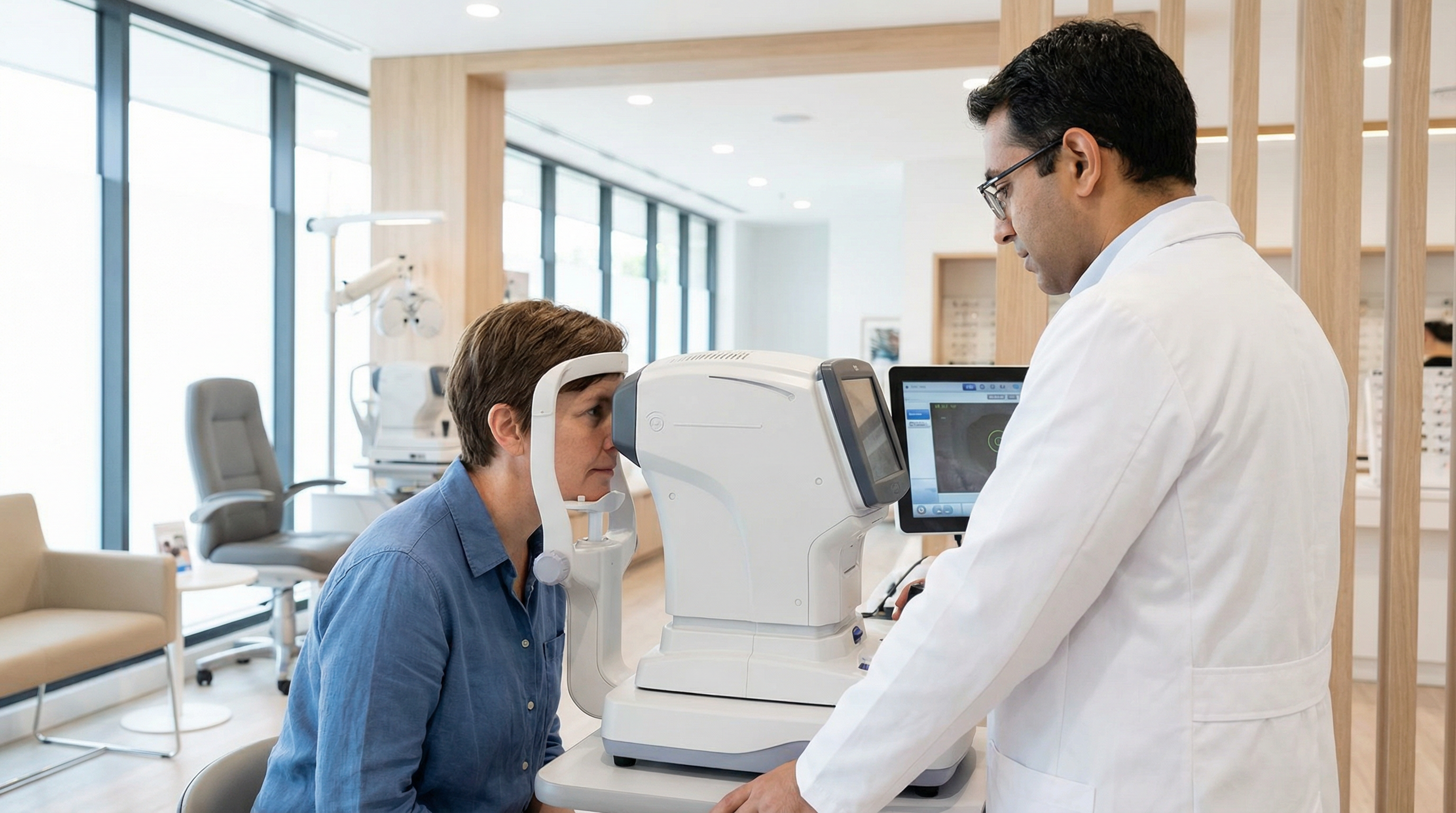
Glaucoma is often called the "silent thief of sight" — and for good reason. It can steal your peripheral vision slowly, over years, without any pain or obvious warning signs. By the time most people notice something is wrong, significant and permanent damage has already occurred. At Eye Medics Optometry in Fayetteville, NC, we specialize in early detection and ongoing glaucoma management to help you keep the vision you have.
We serve patients throughout Cumberland County, including Hope Mills, Spring Lake, Raeford, and the Fort Liberty area. If you have been told you have high eye pressure, a family history of glaucoma, or are simply due for a comprehensive eye exam, our team is here to help.
What Is Glaucoma?
Glaucoma is a group of eye diseases that damage the optic nerve — the bundle of nerve fibers that carries visual information from your eye to your brain. In most cases, this damage is caused by elevated intraocular pressure (IOP), the fluid pressure inside your eye. When that pressure stays too high for too long, it slowly destroys optic nerve fibers, causing permanent vision loss that starts in your peripheral (side) vision and can eventually affect your central vision as well.
According to the National Eye Institute (NIH), glaucoma is a leading cause of blindness for people over 60. Globally, about 8.4 million people are bilaterally blind as a result of glaucoma. In the United States, an estimated 3 million people have glaucoma — and about half of them do not know it.
The good news is that with early detection and consistent treatment, most people with glaucoma can preserve their vision for life. That is why regular eye exams are so important — especially if you are at higher risk.
Types of Glaucoma
There are several forms of glaucoma. Understanding which type you have helps determine the best treatment approach:
Primary Open-Angle Glaucoma (POAG)
The most common type, accounting for about 90% of all glaucoma cases. The drainage angle of the eye remains open, but the drainage canals become clogged over time, causing pressure to build up slowly. There are no early symptoms — vision loss happens gradually.
Angle-Closure Glaucoma
Less common but more urgent. The iris bulges forward and blocks the drainage angle, causing a sudden spike in eye pressure. Symptoms include severe eye pain, headache, nausea, and blurred vision. This is a medical emergency that requires immediate treatment.
Normal-Tension Glaucoma
Optic nerve damage occurs even though eye pressure is within the normal range. The optic nerve may be unusually sensitive to pressure, or reduced blood flow to the nerve may be a factor.
Secondary Glaucoma
Caused by another condition — such as diabetes, eye injury, inflammation, or certain medications (especially steroids). Treating the underlying cause is part of the management plan.
Ocular Hypertension
Eye pressure is higher than normal, but no optic nerve damage or vision loss has occurred yet. This is considered a risk factor for glaucoma and requires regular monitoring.
Who Is at Risk for Glaucoma?
Anyone can develop glaucoma, but certain factors significantly increase your risk. It is especially important for members of high-risk groups to get regular eye exams — even if they feel fine and have no vision complaints.
Glaucoma Risk by Ethnicity (Relative Risk)
Primary open-angle glaucoma (POAG) is 6.6 to 6.8 times more prevalent among African Americans and accounts for about 19% of all blindness in that population. (Source: American Optometric Association)
Age over 60
Risk increases significantly with each decade of life.
Family history of glaucoma
Having a parent or sibling with glaucoma raises your risk 4 to 9 times.
African American heritage
POAG is 6 to 8 times more common and tends to develop earlier and more severely.
Hispanic or Latino heritage
Risk is higher than in Caucasians, especially after age 65.
High intraocular pressure
Elevated eye pressure is the most significant modifiable risk factor.
Thin corneas
Thin corneas may be associated with weaker optic nerve structure.
Diabetes
People with diabetes are twice as likely to develop glaucoma.
Severe nearsightedness
High myopia increases the risk of open-angle glaucoma.
If you have diabetes, be sure to read about our diabetic eye exams, which include glaucoma screening as part of every visit.
Symptoms: The Silent Thief of Sight
Primary open-angle glaucoma — the most common type — typically causes no pain and no noticeable symptoms in the early stages. The peripheral vision loss happens so gradually that most people do not notice it until the disease is well advanced. By the time central vision is affected, irreversible damage has already been done.
Warning Signs That Require Immediate Attention:
- Sudden severe eye pain
- Sudden blurred vision or halos around lights
- Nausea or vomiting along with eye pain
- Redness of the eye
- Headache on the same side as the affected eye
These symptoms may indicate acute angle-closure glaucoma — a medical emergency. Call us immediately or go to an emergency room.
Because open-angle glaucoma has no early warning signs, the only way to detect it is through a comprehensive eye exam. The Glaucoma Research Foundation recommends that everyone over 40 get a baseline glaucoma screening, and that high-risk individuals get tested every one to two years.
How We Diagnose Glaucoma in Fayetteville, NC
Diagnosing glaucoma requires several tests because no single measurement tells the whole story. At Eye Medics, Dr. Singletary uses a comprehensive battery of tests to evaluate your risk and detect any damage:
- 1
Tonometry (Eye Pressure Test)
We measure the pressure inside your eye using a non-contact tonometer (the air puff test) or a more precise contact tonometer. Normal eye pressure is between 10 and 21 mmHg, but some people develop glaucoma at normal pressures.
- 2
Ophthalmoscopy (Optic Nerve Exam)
We dilate your pupils and examine the optic nerve directly with a special lens. We look for changes in the cup-to-disc ratio and signs of nerve fiber layer thinning.
- 3
Visual Field Testing (Perimetry)
This test maps your peripheral vision to detect blind spots caused by optic nerve damage. You will press a button each time you see a flashing light in your side vision.
- 4
OCT (Optical Coherence Tomography)
A non-invasive scan that measures the thickness of the retinal nerve fiber layer around the optic nerve. Thinning in this layer is an early sign of glaucoma damage.
- 5
Pachymetry (Corneal Thickness)
We measure the thickness of your cornea because thin corneas are associated with higher glaucoma risk and can affect the accuracy of pressure readings.
- 6
Gonioscopy (Drainage Angle Exam)
A special lens placed on the eye allows us to see the drainage angle and determine whether it is open or closed — which helps classify the type of glaucoma.
Glaucoma Treatment Options
The goal of all glaucoma treatment is to lower intraocular pressure (IOP) to a level that stops or slows further optic nerve damage. Vision that has already been lost cannot be recovered, which is why starting treatment early is so important.
Treatment is highly individualized. Your target pressure depends on how much damage has already occurred, your baseline pressure, and your other risk factors. The chart below summarizes the main treatment options:
| Treatment | How It Works | Pressure Reduction | Frequency |
|---|---|---|---|
| Prostaglandin Analogs (Latanoprost, Bimatoprost) | Increase fluid drainage from the eye | 25–35% | Once daily (evening) |
| Beta-Blockers (Timolol) | Reduce fluid production in the eye | 20–30% | Once or twice daily |
| Alpha Agonists (Brimonidine) | Reduce fluid production and increase drainage | 20–25% | Two to three times daily |
| Carbonic Anhydrase Inhibitors (Dorzolamide) | Reduce fluid production | 15–20% | Two to three times daily |
| Selective Laser Trabeculoplasty (SLT) | Laser improves drainage angle function | 20–30% | One-time procedure (may repeat) |
| Trabeculectomy / MIGS Surgery | Creates new drainage pathway | 30–50% | Surgical procedure |
Source: American Optometric Association, National Eye Institute. Results vary by individual. Always follow your doctor's recommendations.
Most patients start with prescription eye drops, which are very effective when used consistently. The biggest challenge with eye drops is remembering to use them every day — missing doses allows pressure to rise and can accelerate damage. Our team will work with you to find a regimen that fits your lifestyle.
For patients who cannot tolerate eye drops or whose pressure is not well controlled with medication, laser treatment (SLT) is often an excellent option. It is a quick, painless in-office procedure that improves the eye's natural drainage system. For more advanced cases, surgical options including minimally invasive glaucoma surgery (MIGS) may be recommended.
Prescription Eye Drops Explained
Glaucoma eye drops are the most common first-line treatment. There are several classes of drops, and your doctor may prescribe one or a combination. Here is what you should know about using them effectively:
Use them at the same time every day
Consistency keeps pressure stable. Set a phone reminder if needed.
Press on the inner corner of your eye
After applying drops, press gently on the inner corner for 1 to 2 minutes to prevent the medication from draining into your throat.
Wait 5 minutes between different drops
If you use more than one type of drop, wait at least 5 minutes between them so each one is absorbed properly.
Never skip doses
Missing even a few doses can cause pressure spikes that damage the optic nerve.
Tell us about side effects
Common side effects include eye redness, stinging, or changes in eyelash growth. Some drops can affect heart rate or blood pressure.
Store drops properly
Most glaucoma drops should be stored at room temperature. Check the label and discard after the recommended period.
Lifestyle Tips to Help Protect Your Vision
While lifestyle changes alone cannot treat glaucoma, they can support your overall eye health and may help keep eye pressure lower:
Exercise regularly
Moderate aerobic exercise like walking or cycling can lower intraocular pressure. Avoid activities that involve heavy straining or inverted positions.
Limit caffeine
Large amounts of caffeine can temporarily raise eye pressure. Moderate coffee or tea intake is generally fine.
Stay hydrated — but do not overdrink
Drinking large amounts of water quickly can temporarily raise eye pressure. Sip fluids throughout the day instead.
Sleep with your head slightly elevated
Elevating your head about 20 degrees while sleeping may help reduce nighttime eye pressure spikes.
Protect your eyes from injury
Eye injuries can cause secondary glaucoma. Wear protective eyewear during sports and high-risk activities.
Keep all follow-up appointments
Glaucoma is a lifelong condition. Regular monitoring is the only way to know if your treatment is working.
Frequently Asked Questions
Glaucoma is diagnosed through a comprehensive eye exam that includes measuring your eye pressure (tonometry), examining your optic nerve, testing your peripheral vision (visual field test), measuring your corneal thickness (pachymetry), and examining your drainage angle (gonioscopy). No single test diagnoses glaucoma — it takes the full picture.
Last reviewed: February 2026 by Dr. James H. Singletary, OD, FIAOMC
Protect Your Vision — Get Screened for Glaucoma
Serving Fayetteville, Hope Mills, Spring Lake, Raeford, and Fort Liberty. Early detection is the only way to stop glaucoma before it steals your sight.
Book a Glaucoma Screening