
Quick Answer: How Often Should Adults Get Eye Exams?
Adults with no known risk factors should have a comprehensive eye exam every 1–2 years. Adults with diabetes, high blood pressure, a family history of glaucoma, or other risk factors should be seen annually. After age 60, annual exams are recommended for everyone. Many serious eye conditions — including glaucoma and diabetic retinopathy — have no early symptoms, making regular exams essential even when your vision feels fine.
I hear it all the time: "My vision is fine, I don't need to come in." And I understand the logic — if nothing hurts and you can see clearly, why bother? But here's the thing about eye disease: most of the conditions that cause permanent vision loss don't give you any warning. Glaucoma destroys peripheral vision slowly and painlessly. Diabetic retinopathy can cause irreversible damage before you notice any blurring. Macular degeneration starts with subtle changes you might chalk up to needing better lighting.
At Eye Medics Optometry in Fayetteville, NC, a comprehensive adult eye exam is about much more than updating your glasses prescription. It's a window into your overall health — and one of the most cost-effective preventive health screenings available. We serve adults throughout Cumberland County, including Fort Liberty, Hope Mills, Spring Lake, and Raeford.
How Often Do Adults Need Eye Exams?
The answer depends on your age, health history, and risk factors. Here's a simple reference guide based on the American Optometric Association's evidence-based guidelines:
| Patient Group | Recommended Frequency |
|---|---|
| Ages 18–39, no risk factors | Every 2 years |
| Ages 18–39, with risk factors | Annually |
| Ages 40–64, all adults | Every 1–2 years |
| Ages 65+, all adults | Annually |
| Diabetics (all ages) | Annually or more |
| Glaucoma suspects | Every 6–12 months |
Source: American Optometric Association Evidence-Based Clinical Practice Guidelines
If you're not sure which category you fall into, the safest answer is annual exams. The cost of a missed diagnosis far outweighs the cost of an extra eye exam.
What a Comprehensive Adult Eye Exam Includes
A comprehensive eye exam at Eye Medics is not a quick vision check. It's a thorough evaluation of both your visual function and the health of your eyes. Here's what we cover:
Visual Acuity
How clearly you see at distance and near — and whether your current prescription is still accurate.
Refraction
A precise measurement of your prescription, including sphere, cylinder, and axis for glasses or contacts.
Intraocular Pressure
Elevated eye pressure is a major risk factor for glaucoma. We check this at every exam.
Visual Field Testing
Peripheral vision testing to detect early glaucoma damage, neurological issues, or other field defects.
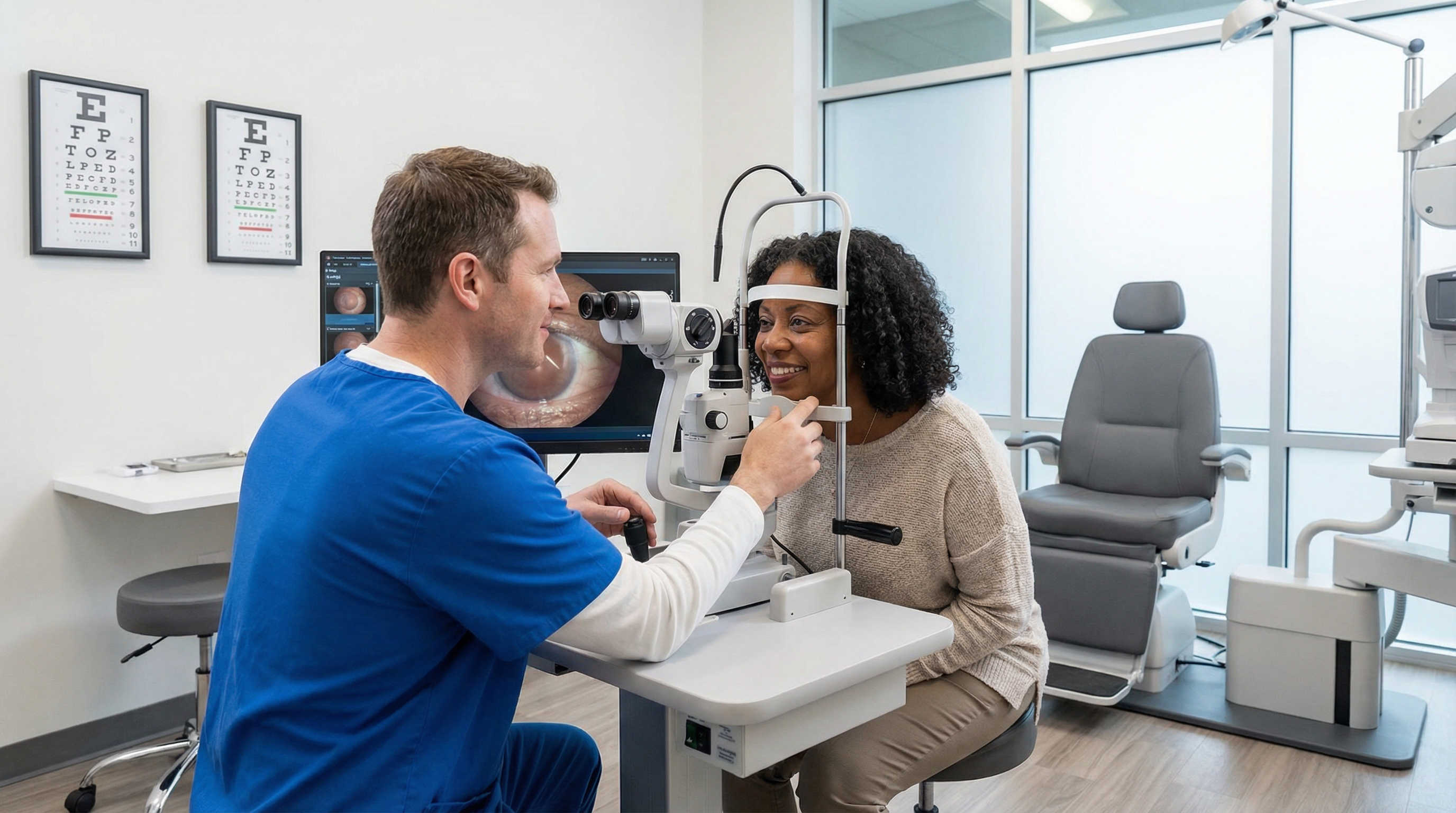
Slit-Lamp Exam
A high-magnification view of the front of the eye — cornea, lens, iris, and anterior chamber.
Dilated Fundus Exam
A dilated view of the retina, optic nerve, and blood vessels — the most important part of the health exam.
Dry Eye Evaluation
Assessment of tear quality and quantity, meibomian gland function, and ocular surface health.
Color Vision & Contrast
Especially important for patients with diabetes, neurological concerns, or occupational requirements.
The whole exam typically takes 45 to 60 minutes. If dilation is needed, plan for an additional 30 minutes for your pupils to dilate, and bring sunglasses — your eyes will be light-sensitive for a few hours afterward.
Conditions We Screen For
Every adult eye exam at Eye Medics includes screening for the major sight-threatening conditions. Here's what we're looking for and why it matters:
Glaucoma
The 'silent thief of sight' — elevated pressure damages the optic nerve gradually, with no pain or early symptoms. It's the second leading cause of blindness worldwide. Early detection through regular pressure checks and optic nerve evaluation is the only way to prevent permanent vision loss.
Diabetic Retinopathy
High blood sugar damages the tiny blood vessels in the retina. It's the leading cause of new blindness in working-age adults in the U.S. Annual dilated exams are essential for anyone with diabetes — even if their vision feels normal.
Age-Related Macular Degeneration (AMD)
AMD affects the central part of the retina responsible for reading, driving, and recognizing faces. Early detection allows us to recommend lifestyle changes and supplements that can slow progression significantly.
Cataracts
The natural lens of the eye gradually clouds with age. Most people develop cataracts by their 70s or 80s. We monitor progression and refer for surgery when vision is significantly affected.
Retinal Detachment
A sudden increase in floaters or flashes of light can signal a retinal tear or detachment — a medical emergency. If you experience these symptoms, call us immediately.
What Changes After 40
The 40s are when most people start noticing changes in their vision — even if they've had perfect eyesight their whole lives. The most common culprit is presbyopia: the gradual stiffening of the eye's natural lens that makes it harder to focus up close.
You'll know presbyopia has arrived when you start holding your phone at arm's length to read it, or when you need more light to read comfortably at night. It happens to virtually everyone — it's not a disease, just a normal part of aging. The good news is that it's very manageable with reading glasses, bifocals, progressive lenses, or multifocal contact lenses.
After 40, annual eye exams become more important — not just for presbyopia, but because the risk of glaucoma, macular degeneration, and cataracts all increase significantly with age. Don't skip your exam just because your vision seems fine.
We also see more dry eye complaints in patients over 40, especially women going through perimenopause. Hormonal changes affect tear production and quality. If your eyes have been feeling gritty, burning, or watery, mention it at your exam — we have very effective treatments, including IPL therapy at our Dry Eye Center.
Who Needs More Frequent Exams?
Certain patients need to be seen more frequently than the standard guidelines suggest. If any of the following apply to you, we recommend annual exams at minimum:
Diabetes (Type 1 or Type 2)
High blood pressure
Family history of glaucoma
African American heritage (higher glaucoma risk)
Previous eye injury or surgery
High myopia (nearsightedness)
Taking medications that affect the eyes (e.g., Plaquenil, steroids)
History of retinal disease
Contact lens wearers
Occupational visual demands (pilots, drivers, surgeons)
What Your Eyes Reveal About Your Overall Health
The retina is the only place in the body where blood vessels can be viewed directly — without any cutting or scanning. That makes the eye a uniquely powerful window into your overall cardiovascular and metabolic health. Here are some of the systemic conditions we can detect signs of during a routine eye exam:
| Systemic Condition | Eye Signs We Look For | Clinical Urgency |
|---|---|---|
| Type 2 Diabetes | Retinal hemorrhages, microaneurysms, macular edema, new blood vessel growth | High |
| Hypertension | Arteriovenous nicking, copper/silver wiring, flame hemorrhages, papilledema | High |
| High Cholesterol | Corneal arcus (in younger patients), retinal artery occlusions | Moderate |
| Multiple Sclerosis | Optic neuritis (sudden vision loss, pain with eye movement) | High |
| Thyroid Disease | Proptosis (bulging eyes), eyelid retraction, dry eye, restricted eye movement | Moderate |
| Autoimmune Disorders | Uveitis (inflammation inside the eye), scleritis, dry eye syndrome | Moderate |
Source: American Optometric Association, Mayo Clinic
I've had patients come in for a routine exam and leave with a referral to their primary care doctor — because we found signs of undiagnosed diabetes or dangerously high blood pressure in their retinal blood vessels. That's not rare. It's one of the most valuable things a comprehensive eye exam can do for your health.
Insurance and TRICARE
We proudly serve active duty service members, veterans, and military families at Fort Liberty and throughout Cumberland County. We accept TRICARE Prime and TRICARE Select for comprehensive eye exams, as well as most major insurance plans.
TRICARE Prime & Select
VSP Vision Care
EyeMed
Blue Cross Blue Shield
Aetna / Cigna / United
Medicaid / Medicare
Note: Most vision insurance plans cover a comprehensive eye exam once per year. Medical insurance (including TRICARE) may cover the exam if it's medically necessary — for example, if you have diabetes, glaucoma, or another condition affecting your eyes. Our team will help you understand your coverage before your appointment.
Frequently Asked Questions
Last reviewed: February 2026 by Dr. James H. Singletary, OD, FIAOMC
Schedule Your Adult Eye Exam Today
Serving Fayetteville, Hope Mills, Spring Lake, Raeford, and Fort Liberty. Same-week appointments often available. TRICARE and most major insurance accepted.
Book an Eye Exam