
Myopia Management Program
Proactive care to protect your child's vision for a lifetime — not just today.
Is your child's myopia getting worse? Find out your risk level in 2 minutes.
Free 5-question screener · Takes less than 2 minutes
Understanding the Condition
Myopia Is More Than Blurry Vision
Myopia, commonly known as nearsightedness, is a progressive condition where the eyeball grows too long. Light focuses in front of the retina instead of on it — causing distant objects to appear blurry.
For a child, this means their prescription can get stronger year after year. But here’s what most parents don’t realize: a stronger prescription isn’t just an inconvenience. It means the eye is physically elongating — and that elongation increases the risk of serious, sight-threatening diseases later in life.
The good news? We can do something about it. Myopia control treatments don’t just correct blur — they actively slow the progression.
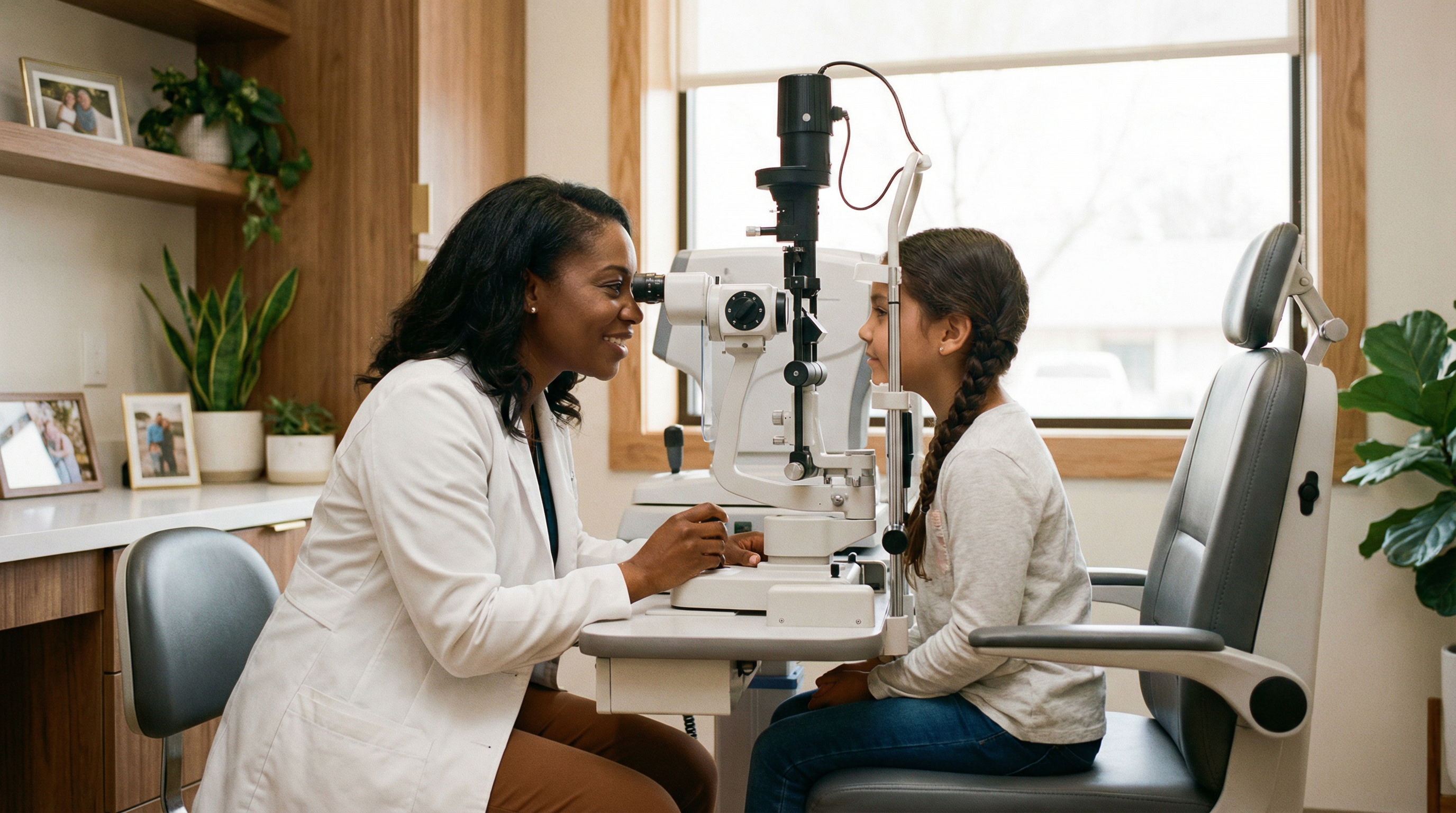
50%
of the world will be myopic by 2050 (WHO)
Rising Concern
The Myopia Epidemic Is Real — and It’s Here
Childhood myopia is increasing at an alarming rate. The WHO projects that by 2050, half of the world’s population will be myopic. In the US, rates have doubled in the last 30 years. This surge is driven by:
- Increased Screen Time — Prolonged focus on digital devices strains the eyes and accelerates elongation.
- Less Outdoor Time — Natural sunlight has a measurable protective effect against myopia development.
- Genetic Factors — Children with one myopic parent have 3× the risk; two myopic parents = 6× the risk.
50%
of world population projected myopic by 2050
2×
increase in US myopia rates in 30 years
6×
higher risk when both parents are myopic
5–8
the critical age window to start treatment
Why "Just Get Stronger Glasses" Is the Wrong Answer
High myopia (above -5.00 or -6.00 diopters) dramatically increases the risk of these serious, potentially blinding conditions. The goal of myopia control is to keep your child’s prescription as low as possible — for life.
Retinal Detachment
10× higher risk
A medical emergency where the retina pulls away from its normal position, causing permanent vision loss if not treated immediately.
Myopic Maculopathy
40× higher risk
Degeneration of the central retina (macula), leading to irreversible central vision loss. The leading cause of blindness in East Asia.
Glaucoma & Cataracts
3–4× higher risk
Significantly earlier onset and higher risk of these common but serious eye diseases, often requiring surgery.
Treatment Options
Comparing Myopia Control Treatments
Not all myopia treatments are created equal. Here’s how the evidence-based options compare.
| Treatment | Efficacy | Glasses-Free | Age Range | Reversible |
|---|---|---|---|---|
Ortho-K (sleepSEE®) Overnight lenses that reshape the cornea and slow eye elongation. | 43–64% | 6+ | ||
Low-Dose Atropine Daily eye drops that relax the focusing mechanism. | 50–77% | — | 5+ | |
Specialty Soft Lenses Multifocal or peripheral defocus contact lenses worn during the day. | 25–50% | — | 8+ | |
Single-Vision Glasses Corrects blur but does nothing to slow progression. | 0% | — | Any |
Efficacy figures represent reduction in axial elongation vs. single-vision glasses. Sources: COMET, ATOM, ROMIO, and MiSight clinical trials.
Our Approach
Comprehensive Myopia Control Program
We don’t just correct blurry vision — we actively work to slow its progression with proven, evidence-based treatments tailored to your child.
Ortho-K Overnight Lenses
Custom-designed lenses worn overnight to gently reshape the cornea, providing clear vision during the day while actively slowing myopia progression by 43–64%.
Learn about sleepSEE®Low-Dose Atropine Drops
A well-researched daily eye drop that relaxes the eye's focusing mechanism, reducing myopia advancement by up to 77% in many children. Often combined with Ortho-K for maximum effect.
Lifestyle & Environmental Counseling
Practical, evidence-based strategies including the 20-20-20 rule, 90+ minutes of daily outdoor time, and optimized lighting for reading and screen use.
The Window for Maximum Impact Is Now
Myopia progresses fastest between ages 8 and 14. The earlier treatment begins, the more progression we can prevent — and the lower the final prescription will be.
Ages 5–8
Ideal start
Catching myopia at onset gives us the most time to intervene and the greatest long-term impact.
Ages 9–13
Critical window
The fastest progression years. Starting treatment now can prevent significant prescription increases.
Ages 14–18
Still beneficial
Progression slows but doesn't stop. Treatment still reduces risk and stabilizes vision sooner.
Our Experts
Led by a Nationally Recognized Myopia Specialist
Our Myopia Management program is led by Dr. James H. Singletary, OD, FIAOMC — a Fellow of the International Academy of Orthokeratology and Myopia Control, a distinction held by fewer than 300 optometrists in the United States.
Supported by Dr. Eva Shiau Singletary, OD, our team provides the most advanced and personalized myopia care in the Fayetteville region. sleepSEE® myopia control is a specialty service. Flexible payment options and HSA/FSA funds are accepted.
Specialists: Dr. James H. Singletary & Dr. Eva Shiau Singletary
Fellow, International Academy of Orthokeratology and Myopia Control (FIAOMC)
North Carolina's first designated sleepSEE® Myopia Control Clinic
Is My Child’s Myopia Being Managed — or Just Corrected?
Do they get a stronger prescription every year?
Has their eye doctor discussed myopia control options?
Are they spending 90+ minutes outdoors daily?
Have they had a corneal topography scan?
If you answered yes to the first question and no to the others, it’s time for a myopia control consultation.
Book a ConsultationIs Your Child's Prescription Getting Worse Every Year?
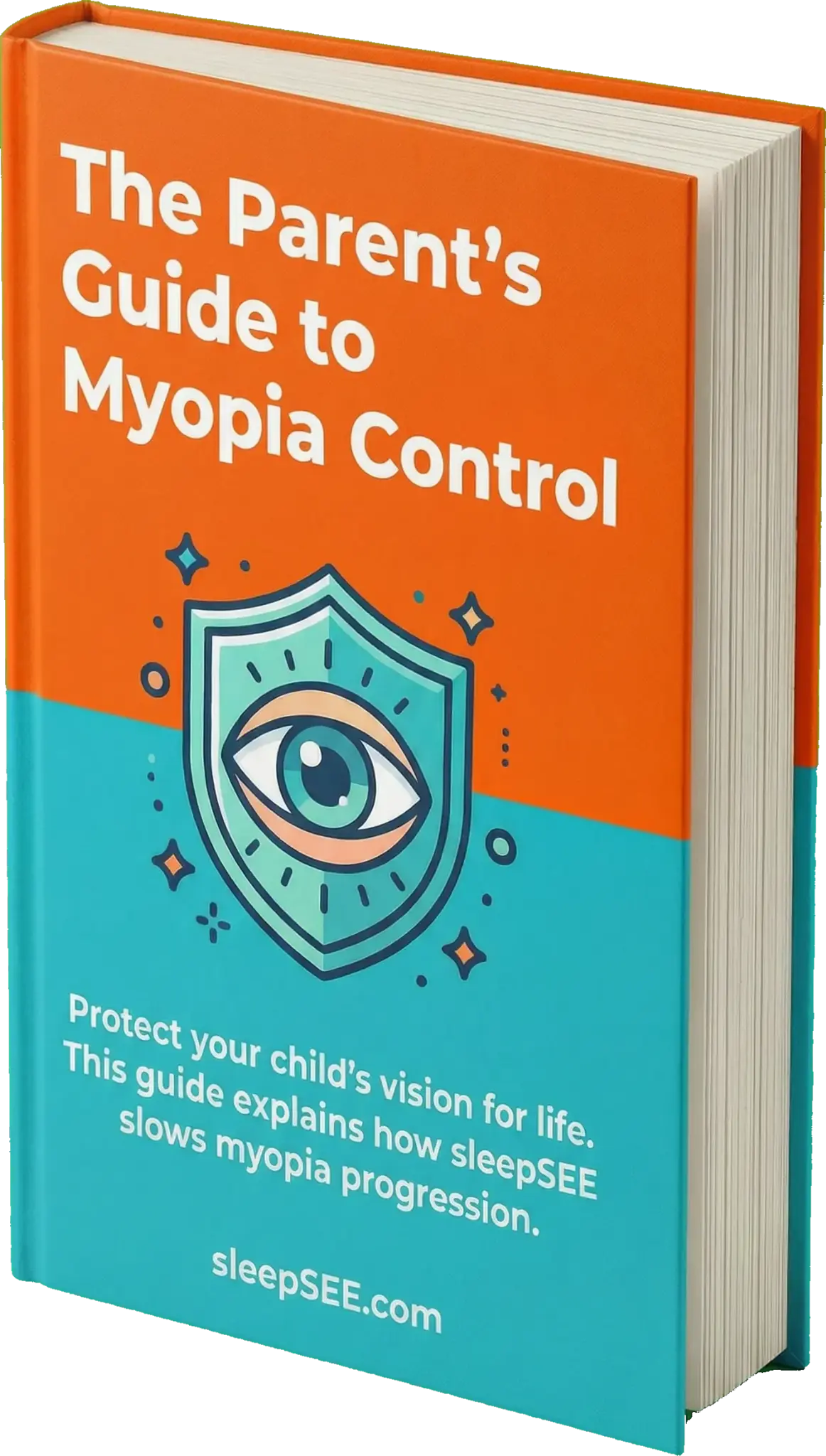
Most parents don't realize myopia isn't just a vision problem — it's a progressive condition that can be slowed. Our free guide explains exactly how, in plain language.
- Learn why your child's glasses prescription keeps getting stronger — and what you can actually do to stop it
- Discover the overnight lens treatment that lets kids see clearly all day, without wearing glasses or contacts
- Find out if your child is a candidate for myopia control and what to expect from treatment
Free for parents. No purchase required.
Last reviewed: February 2026 by Dr. James H. Singletary, OD, FIAOMC
Want to Learn More?
Dive Deeper Into the Science of Myopia Progression
For in-depth clinical research, risk factor guides, progression calculators, and the latest treatment data, visit MyopiaProgression.com — a dedicated resource for parents and eye care professionals who want to understand the full picture.
Explore MyopiaProgression.comMedical Disclaimer
This page is for informational purposes only and does not constitute medical advice, diagnosis, or treatment. The information provided here should not be used as a substitute for professional medical advice from a qualified eye care provider. Always consult with a licensed optometrist or ophthalmologist regarding any eye health concerns, symptoms, or treatment decisions.
Ready to Schedule Your Visit?
Our team is here to help you and your family see clearly. Book your appointment today.
